
Hospitality interview
b´mine hotels interview with Matthias Beinlich
Published on July 05, 2023 · 8 min read · Sascha Rudnick
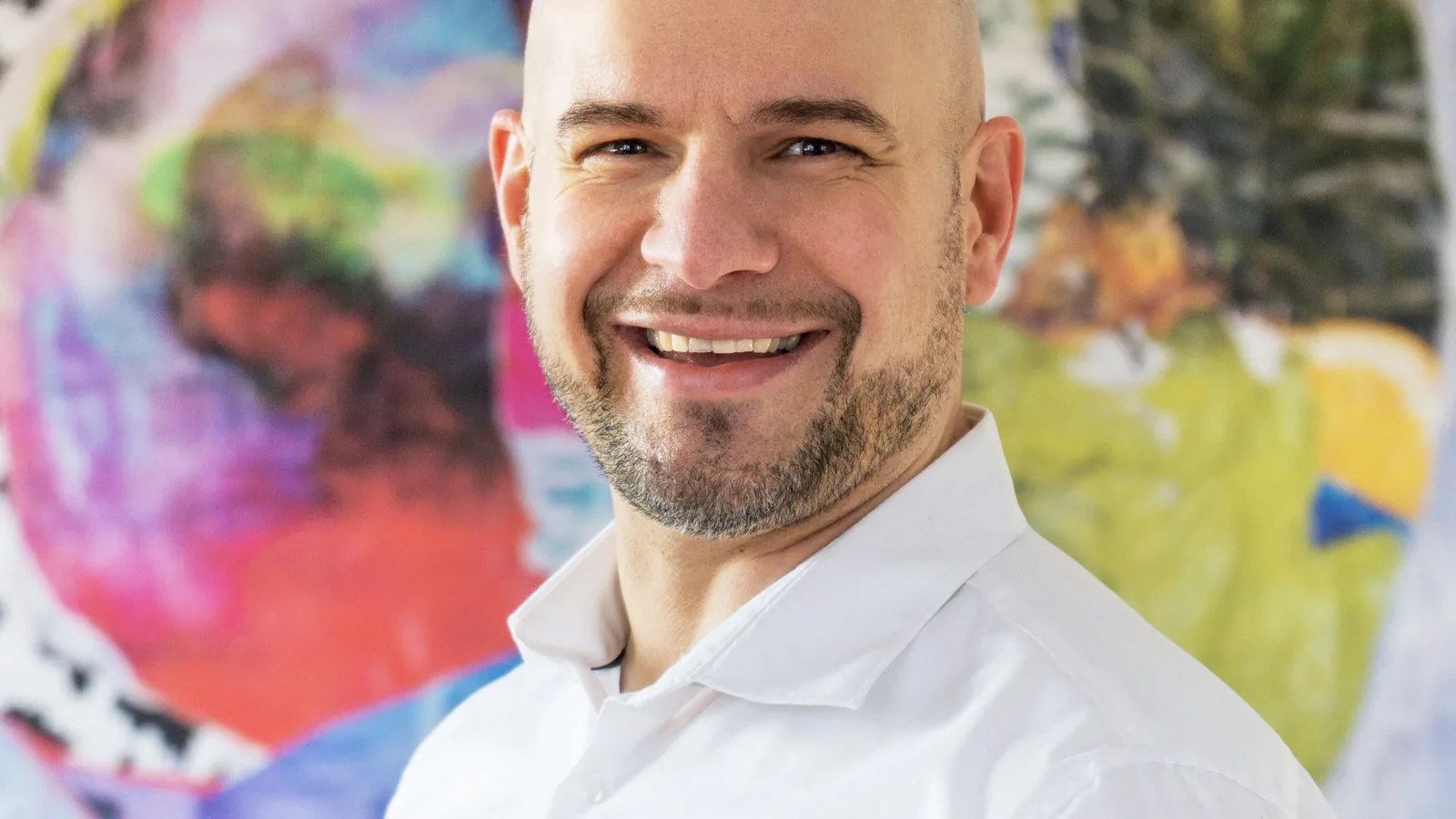
made with AI
"Hotels should be open to new technologies and ready to invest in them"
The hotel industry has undergone rapid change in recent years, and a number of significant trends have emerged. Increasing personalization of the guest experience and advancing digitalization have shaped the industry considerably. Sustainability and environmentally friendly practices have also become important factors. In the following interview with Matthias Beinlich, Managing Director of b'mine hotels, we take a closer look at these developments.
About Matthias Beinlich, Managing Director of b’mine hotels
Born and raised in Berlin, and a father of two, I can already look back on a long career in the hotel industry. I gained my expertise at renowned chains such as Kempinski and Melià Hotels, where I mainly held management roles in sales, marketing and revenue.
I am part of the founding team of b’mine hotels and have therefore been with this young hotel group since 2018. Since early 2019, I have led my experienced team as Managing Director.
My particular focus is on developing further hotel brands, integrating forward-looking technologies into the entire guest experience, and expanding the b’mine hotels group.
About the b’mine hotels group
Our hotel group was founded in Berlin in 2018, which is also where our headquarters are based. The first property opened in March 2022 in Frankfurt am Main, in the Gateway Gardens district that belongs to Airport City. We opened our second hotel a year later, in early March 2023, in the up-and-coming Düsseldorf district of Flingern.
One key feature sets our hotels apart from other lifestyle hotels: guests can bring their own car right up to their hotel room. To make that possible, some rooms in every b’mine hotel are fitted with a CarLift. One of these CarLifts even goes all the way up to the event area, which is always located on the top floors of our hotels. We stand for thoughtful design, first-class food and beverage, innovative event spaces and state-of-the-art digital offerings. Our architectural concept has already won several awards.
How has the hotel industry developed in recent years, and which trends have proven particularly significant?
The hotel industry has evolved considerably in recent years. One major trend is the increasing personalization of the guest experience. Hotels are relying more and more on individualized offers and services to meet guests' needs. Digitalization, too, has become highly important. Guests want to book, check in and pay quickly and easily. A well thought-out guest journey is essential to reach digitally savvy guests.
Demand for sustainable and environmentally friendly hotels has also increased. Many guests value green initiatives and environmentally conscious practices.
What challenges do you see for hotels today, and how do you deal with them?
Right now, the biggest challenge is finding suitable staff who live our service philosophy. As a full-service hotel, direct contact with our guests still matters enormously to us, even though we have already digitalized many processes.
Because of growing competition from online booking platforms and alternative accommodation such as Airbnb, we will need to develop further marketing strategies and find innovative ways to highlight our service offering going forward — all the more so as booking behavior (bookings are becoming more short-term) and information channels (social media) keep changing.
Another challenge is the constant evolution of technology and adapting to changing customer needs. That's why we watch the market very closely.
How do you use technology and IT solutions to optimize internal processes and increase efficiency in your hotel?
Technology and IT solutions play a crucial role in optimizing internal processes and increasing efficiency in hotels. By using user-optimized online booking systems, automated check-in/check-out processes, and providing the room key through our app, we offer our guests a seamless stay. Our rooms are equipped with a smart TV that lets guests use their own device or access our digital guest folder. We are currently rolling out our chatbot, which will soon be available to our guests as an information tool.
To optimize our internal processes, we also rely on AI-based software that helps us, for example, respond to guest reviews.
Where do you see the biggest challenges in the digitalization process in the hospitality industry?
The biggest challenge in the digitalization process often lies in integrating different systems and platforms that need to communicate with each other through interfaces. But even choosing the right system already demands a huge amount of attention and know-how. The complexity of existing IT infrastructure can therefore often be an obstacle. As a young hotel group, we have the advantage of still being able to act very flexibly, including swapping out systems. To keep this flexibility, we mainly rely on cloud-based software.
Hotels also need to make sure they have adequate data protection and security measures in place to protect their guests' sensitive information. We recommend involving the data protection officer in the digitalization process right from the start.
In your opinion, which specific areas or processes in the hospitality industry are hardest, or even impossible, to integrate into digital platforms?
In my opinion, personal interactions with guests, individualized services and creative culinary experiences are very hard, or impossible, to integrate. Here, the human factor, with its individual personality, still plays a major role. It is important to us to find a balanced approach that uses digital solutions while preserving the personal contact and charm of hospitality.
What strategies would you use to overcome the technological barriers that arise in the course of digital transformation?
To overcome technological barriers, it is important to develop a clear digital strategy and provide resources for training and professional development. Working with technology partners and using agile development methods can also help. It is important to stay flexible and continuously adapt to changing technological requirements.
What lessons have you learned from your experience with digitalization in hospitality, and what advice would you give colleagues or other decision-makers facing similar challenges?
My experience has taught me that willingness to change and to innovate is crucial. Hotels should be open to new technologies and ready to invest in them. My advice to colleagues and decision-makers in similar situations would be to engage thoroughly with guests' needs, listen to their feedback, and find innovative solutions to meet their expectations — but also to take the time to evaluate solutions carefully.
What future trends do you see?
Future trends in the hotel industry continue to include personalizing the guest experience through the use of artificial intelligence and machine learning. Virtual reality and augmented reality can also be used in areas such as virtual hotel tours or enhanced guest experiences. The staffing situation, too, will change through the sensible use of technology. Sustainability will continue to play a major role, as more and more guests pay attention to how environmentally friendly a hotel is.
In your opinion, what will the hotel of the future look like in 20 years?
In 20 years, the hotel of the future could offer an impressive architectural and design mix of futuristic elements and natural, sustainable materials. Buildings would have intelligent structures that adapt independently to their surroundings, maximizing energy efficiency and optimizing the indoor climate. Some hotels might even be embedded in vertical gardens or green walls, creating a harmonious connection to nature.
A modular, adaptable design for hotel rooms is also conceivable, to meet guests' individual needs. For example, intelligent furniture and transformable room concepts would let guests shape and adjust the space to their own preferences. Integrating augmented reality and holographic displays could also create an immersive environment in which guests can enjoy virtual experiences.
The quality of hotels will remain highly important. Hotels will aim to offer luxury and comfort in a sustainable, environmentally friendly way. The use of renewable energy, intelligent energy systems and efficient water use will be a given. Guests will become more demanding, and hotels will focus on first-class service and unique, tailor-made experiences to stand out from the competition.
What role will new technologies such as AI play in the hotel industry in the future?
New technologies will continue to play an important role. Artificial intelligence and machine learning will be used in every aspect of hotel operations, from booking and check-in to personalizing the guest experience. Using AI-driven robots offers the chance to help guests with their requests and improve service. Voice control and smart home integration will become standard, to give guests maximum comfort and convenience.
Advanced data analytics can also be used to better understand hotel guests' needs and preferences and give them tailor-made recommendations. Virtual reality could likewise be used for immersive virtual trips or virtual meetings, offering guests unique experiences without having to leave their hotel room.
Overall, the hotel of the future will be a harmonious interplay of architecture, design, quality and technology. It will offer a sustainable, environmentally friendly setting that meets guests' individual needs while offering the highest level of comfort, personalization and innovation.
Mr. Beinlich, thank you very much for this informative conversation!
Do you work in the hotel industry and need support with digitalization and customer relationship management? As an experienced Salesforce partner, Factory42 offers you comprehensive services around implementing tailor-made solutions for hospitality. Feel free to find out more about our solutions on our hospitality industry page, or get in touch with us directly — we're happy to help!
Originally published on blog.factory42.com
About the author
HubSpot & Salesforce CRM Consultant, factory42
Sascha has been working in the Salesforce world since 2016, growing from an analytics specialist into a Salesforce all-rounder. But the market leader among CRM systems was not enough: since joining factory42 in 2021, Sascha has worked extensively with HubSpot and knows how to put the strengths of both worlds to profitable use. The integration between HubSpot and Salesforce, and a constant willingness to look beyond his own field, are among his particular interests. Sascha is a HubSpot & Salesforce CRM Consultant at factory42.
More articles

made with AI
Unsere Highlights im Marketing Cloud Next Winter ‘27 Release
Was bringt das Winter ‘27 Release der Marketing Cloud Next? Unsere Top 6 Features inkl. Verfügbarkeit & Handlungsempfehlungen für Ihr Team.
Read article
Was die Braze-Übernahme für Ihr Marketing bedeutet
Salesforce kauft Braze für 5,66 Milliarden US-Dollar. Was sich für Kunden von Marketing Cloud und Braze ändert und wie Sie sich jetzt vorbereiten.
Read article
made with AI
Everyone Has AI. What Does It Know About Your Company?
Why context is the bottleneck for AI in sales and what it means for your deals. Live demo in our webinar on November 3, 2026.
Read article